

HONESTY IS THE ROOT
Quality is always satisfactory
Hotline
400-606-8981
NEWS CATEGORY
HOT PRODUCT
MORE
-
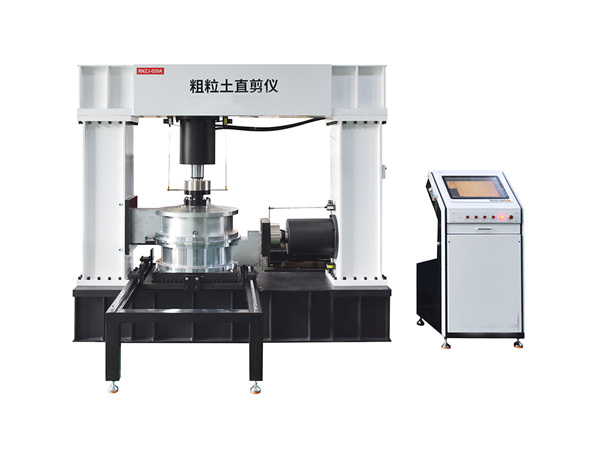 Coarse grained soil direct shear tester
The coarse-grained soil direct shear tester is mainly used for on-site testing and research of dam ma...
-
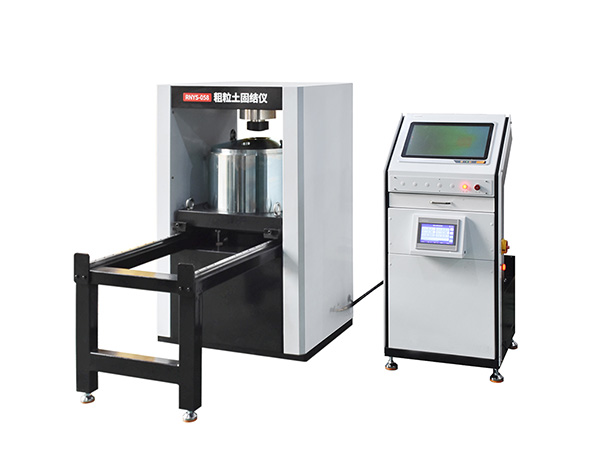 Coarse grained soil consolidation tester
The coarse-grained soil consolidation tester is used to determine the relationship between deformatio...
-
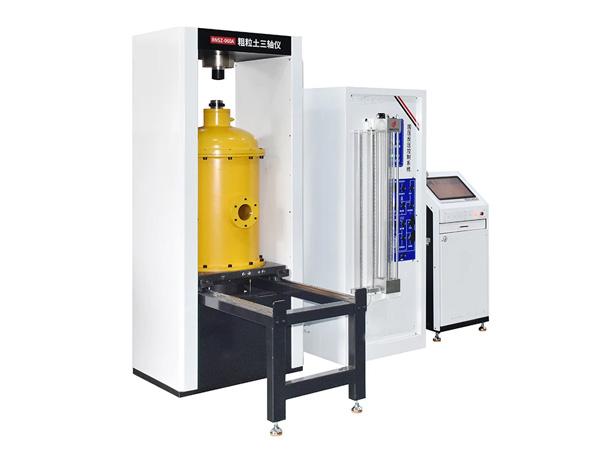 Coarse grained soil triaxial compression tester
This testing machine adopts our company's servo pump control,which has low noise and energy consumpti...
-
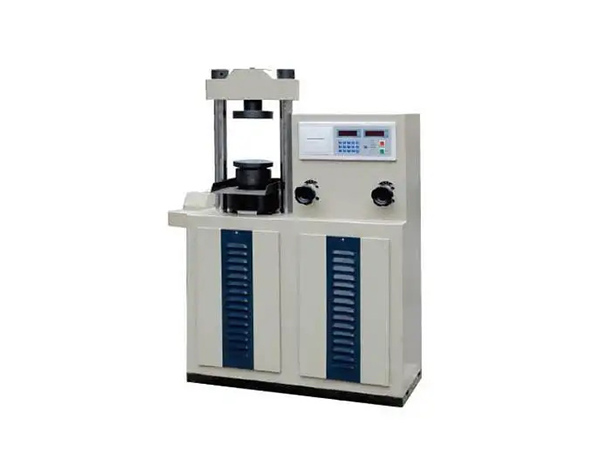 Cement constant stress pressure testing machine
This cement constant stress pressure testing machine is mainly used for compressive testing of cement...
-
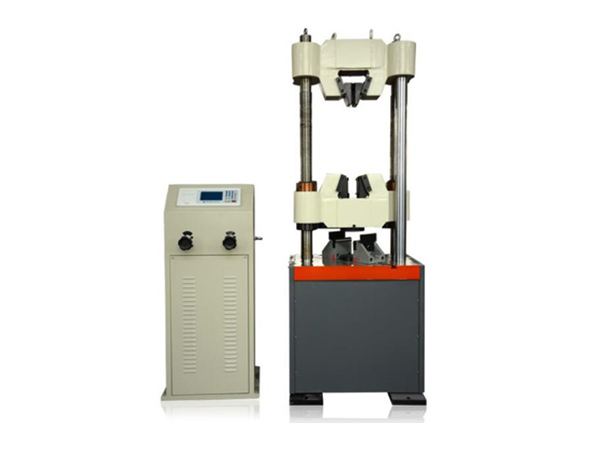 Digital universal material testing machine
The digital universal material testing machine is suitable for tensile, compressive, bending, shear a...
Operation and Use of Concrete Ultrasonic Tester
Dec 25
2024
NEWS DETAIL
The concrete ultrasonic tester is used for non-destructive testing of concrete, and its principle is electromagnetic induction. Due to the presence of steel bars, the electromagnetic field formed by the detector is affected, causing induced currents in the coil. After amplifying the induced currents, the display instrument is driven to provide test results. The operation and use of the concrete ultrasonic tester are as follows:
1. Normal working conditions of ultrasonic instrument
1. The ambient temperature is (0-40) ℃;
2、 The air does not contain corrosive gases and the relative humidity is less than 80%
3、 The fluctuation range of power supply voltage is within ± 10% of the nominal value
4、 There should be no significant vibration or impact
5、 The continuous working time shall not be less than 4 hours
2. Ultrasonic instrument calibration
When any of the following situations occur, the ultrasonic instrument should be calibrated or calibrated:
1、 Before the new ultrasonic device is put into use
2、 The deadline for achieving excellent calibration results (the deadline for excellent results is 1 year)
3、 After repairing or replacing parts of the instrument
4、 The instrument has suffered severe impact or other damage
5、 When there are doubts about the sound velocity value during the detection process
III. Operation of Ultrasonic Device
The ultrasonic device should be operated according to the following steps:
1、 Before using a new instrument, carefully read the instrument manual
2、 After connecting to the power supply, the instrument should be preheated for 10 minutes
3、 Instruments with standard rods and zero adjustment devices, coupling the transducer well with the standard rod, adjusting the amplitude of the first wave to (30-40) mm, and then measuring the sound time value tp of the standard rod. Adjust the zero adjustment potentiometer to deduct the initial reading
4、 When there is no standard rod or zero adjustment device, appropriate transducers and high-frequency cables should be configured on the instrument according to the testing needs, and the initial sound reading to should be measured. If the transducer or high-frequency cable is replaced during the testing process, the initial sound reading to should be re measured. When calculating the ultrasonic sound of concrete, the initial reading to should be deducted
5、 During actual testing, the amplitude of the first wave of the received signal should be adjusted to (30-40) mm before reading the sound time value of each measuring point
4. Maintenance of Ultrasonic Device Ultrasonic device Ultrasonic device should be maintained according to the following regulations:
1、 If the instrument is not used for a long period of time, it should be powered on once a month for no less than 1 hour each time
2、 After the instrument detection is completed, the dust on top should be wiped off in a timely manner, placed in the chassis, and stored in a ventilated, cool, and dry place. Whether stored or working, it must be dust-proof:
3、 During the transportation process, collision and severe vibration should be prevented:
4、 The transducer should be protected from damage and impact, and should be wiped clean and stored separately after operation. The coupling surface of the transducer should avoid wear and tear, and it is strictly prohibited to disassemble and assemble it at will
5、 To protect the accuracy of detection data, the testing unit sometimes needs to perform self inspection on the ultrasonic instrument. The self inspection can be carried out by measuring the sound velocity value of the air. The specific operation is as follows:
① In a constant temperature chamber, take a pair of flat transducers for detection, connect them to an ultrasonic instrument, preheat the machine for 30 minutes, align the radiation surfaces of the two transducers in air, and change the distance between the radiation surfaces of the two transducers in sequence (such as 0.10m, 0.15m, 0.20m, 0.25m, 0.30m, 0.35m, 0.40m). Measure the sound time t1 at different distances, t2,t3,..., Read at least 5 sets of data and measure the air temperature (accurate to 0.2 ℃) simultaneously② When measuring, the following points should be noted:A. The measurement error of transducer spacing should be less than or equal to 0.5%B. The transducer should be suspended relative to each other. If placed on the floor or table, a sponge block should be placed under the transducer