


HONESTY IS THE ROOT
Quality is always satisfactory
Hotline
400-606-8981
PRODUCT CATEGORY
LATEST NEWS
MORE
PRODUCT DETAILS
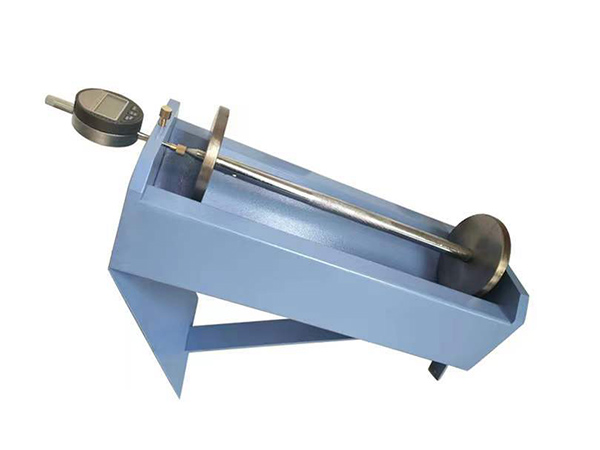
One Overview:
The BCL-355 compensating concrete shrinkage expansion meter is designed according to the standard GB 50119-2003 "Technical Specification for Application of Concrete Admixtures". A one-to-one detection instrument mainly used to determine the longitudinal restrained expansion rate and longitudinal restrained shrinkage rate of compensating concrete. Used to determine the amount of concrete expansion agent used in the project. The instrument has the advantages of simple operation and convenient reading2 Technical parameters
Measurement range 350-360mm
Standard rod length 355 ± 0.02mm
Micrometer range 0-10mm ± 0.001mm
Trial mold specification 100 × 100 × 400mm
External dimensions 500 × 135 × 100mm
Weight ≈ 17kg
III Structure and Function
1. This instrument consists of a base, legs, standard rod, dial gauge, etc. Refer to the attached diagram
2. The base is a V-shaped groove structure, which has the advantages of good centering and easy placement of test blocks, and is used for placing test blocks and standard rods 3. The support legs are hinged structures, which allow the instrument to maintain a 30 ° tilt angle on the platform. When not in use, they can be retracted for easy placement 4. The standard rod serves as the standard length of the instrument, used to calibrate the instrument and position the dial indicatorIV Instructions:
1. Place the instrument and standard rod in a measuring room at 20 ℃± 2 ℃ for 3 hours before use. Support your legs
2. Before measurement, use a standard rod and a bracket to calibrate the length in the V-shaped groove. Loosen the set screw of the dial gauge, adjust the position of the dial gauge, and make the measuring head lightly touch the ball head of the standard rod. Tighten the set screw and fix the dial gauge. Reset the dial gauge and remove the standard rod 3. The placement method of concrete specimens is similar to that of standard rods 4. The production, curing, measurement, and calculation of concrete specimens can be carried out in accordance with the relevant provisions or appendices of the standard GB 50119-2003 "Technical Specification for Application of Concrete Admixtures"Fifth Notes
1. The instrument should be placed on a flat workbench with good support
2. The standard pole needs to be handled with care, without damaging the spherical surfaces at both ends or bending deformation 3. The dial gauge is a delicate component, and the specimen should be placed and removed gently and carefully, without colliding with the gauge rod. After use, the box should be removed. Check the battery level in a timely manner, and replace it with a battery of the same type in case of numerical errors or inability to reset. Instrument oil on the stem After each use, a small amount of lubricating oil should be applied to non painted surfaces to prevent dust