


HONESTY IS THE ROOT
Quality is always satisfactory
Hotline
400-606-8981
PRODUCT CATEGORY
LATEST NEWS
MORE
PRODUCT DETAILS
1、 Overview:
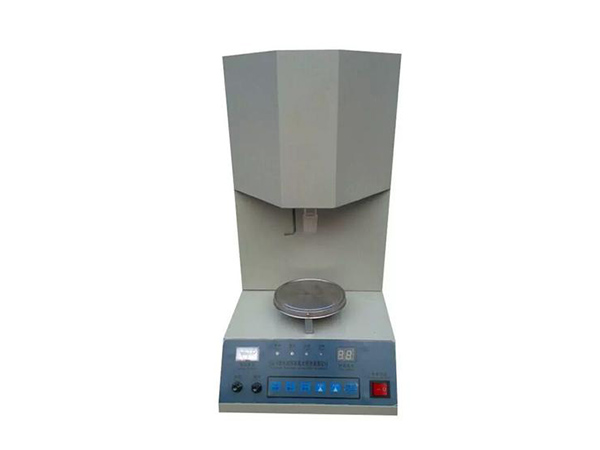
The Ca-5 cement free calcium oxide rapid measuring instrument is a one-to-one detailed instrument suitable for measuring the rate of free calcium oxide in cement clinker. The rapid determination instrument for free calcium oxide in cement is the main indicator for measuring the quality of cement and the thermal system of clinker calcination. The rapid determination instrument for free calcium oxide in cement adopts the direct titration method with ethylene glycol extraction and benzoic acid. Under specific conditions, it only takes 3 minutes and the speed is suitable to accurately determine the content of free calcium oxide. It can be applied to production control in cement plants, building materials, research units, and teaching buildings in colleges and universities The Ca-5 cement free calcium oxide rapid measuring instrument has a very excellent measuring principle, using a single-chip microcomputer control with suitable accuracy, supplemented by one-to-one integrated circuits. Rigorous and standardized design, stable performance, and simple operation. The measurement results are displayed digitally, intuitively and accurately Compared with previous free calcium analyzers, the cement free calcium oxide rapid analyzer eliminates steps such as boiling, reflux, and titration, greatly improving the analysis speed. At the same time, it also reduces human error, taking 5-15 minutes to analyze a sample, greatly reducing the labor intensity of analysts. There are alarm prompts for both temperature reaching and measurement completion, reminding experimental personnel to perform corresponding operations The reagent ethylene glycol used in the measuring instrument for determining the rate of free calcium oxide in cement can be recycled and reused, which can save a lot of chemical reagents. The equipment of this instrument has successfully advanced the measurement technology of free calcium oxide in cement clinker 2. Main technical parameters:1. Accuracy: Standard deviation is 0.064%
2. Extraction time: 3min
3. Power supply voltage: 220V 50HZ
4. Power: 300W
5. Motor: stepless speed regulation
6. Average heating rate: 60 ℃/min
3. Working principle:
The suitable measuring instrument for determining the rate of free calcium oxide in cement uses ethylene glycol to react with free calcium oxide in cement clinker. The conductivity of the solution is proportional to the content of free calcium oxide, and the measurement of conductivity indirectly reflects the content of free calcium oxide in cement clinker. This instrument requires calibration to achieve accurate measurement Organic (based on actual reports) solution ethylene glycol reacts with free calcium oxide in cement clinker at high temperatures:(CH2OH) 2+CaO → (CH2O) 2Ca+H2O
The calcium glycol formed by the above reaction dissociates in ethylene glycol according to the following formula:
(CH2O) 2Ca → (CH2O) 22 Ca+Ca2+
Ethylene glycol ions and calcium ions conduct electricity in solution, and the degree of conductivity is determined by the content of free calcium oxide.
. The content of free calcium oxide in cement clinker can be indirectly measured by measuring the conductivity of the solution The cleanliness of the electrode has a significant impact on the accuracy of the measurement results in the use of a rapid measuring instrument for free calcium oxide in cement. Therefore, the conductivity electrode should be kept clean during the use of the instrument 4. Structure and workflow of the instrument: Using a single-chip microcomputer chip as the central control chip and employing large-scale integrated circuits. Through rigorous technical design, the constant temperature control of the constant temperature bath has been completed. Conducting electrode loading power supply, measuring conductivity, keyboard management, data display, and other related tasks1、 Structure of the instrument:
1 Conductivity electrode 2 Constant temperature bath stirring motor 3 Constant temperature bath electric heater 4 50ml triangular bottle 5 Reaction bottle stirrer 6 Reaction bottle stirring motor 7 Motor bracket 8 Constant temperature bath 9 Constant temperature bath temperature sensor 10 Instrument control panel
2. Specific workflow is as follows:
1 Temperature Setting
Open the Ca-5 type cement free calcium oxide analyzer free calcium analyzer cement free calcium oxide rapid analyzer free calcium oxide analyzer cement free calcium oxide rapid analyzer power supply, the instrument will enter standby mode, and the temperature display screen will show the temperature inside the constant temperature bath.
. At this time, press [▲] or [▼] to observe or modify the temperature setting (the temperature display screen shows the set temperature after pressing [▲] or [▼]). Press the corresponding temperature setting once for+1 or -1 operation. If you hold down [▲] or [▼] for 0.5 seconds, it will enter the continuous addition or subtraction state. At this time, the addition or subtraction operation is 5 times per second. If the button is not pressed for 2 seconds, the instrument will automatically remember the current temperature setting value, and the temperature display screen will return to the normal temperature display of the constant temperature bath2 Heating
After selecting the temperature of the constant temperature bath, press the [Heat] button. The light on the heating button will turn on, and the instrument will automatically heat up to the set temperature and stop heating. Control the temperature of the constant temperature bath near the set temperature. There is a heating indicator light on the left to indicate whether the electric heater is working. After the sales volume reaches the set temperature several times, the alarm will sound and the alarm indicator light will flash, indicating that the operator can proceed to the next step.
After reaching the set temperature, a 50ml triangular reaction bottle containing a mixed solution of sample and ethylene glycol reagent can be placed in a constant temperature bath bracket. Press the [Stir] button and adjust the stirring potentiometer knob to achieve the appropriate motor speed4 Measurement
After placing the reaction bottle and starting the stirring, place the electrode into the reaction bottle, press the [Measurement] button, and the instrument will automatically measure the conductivity and convert it into a percentage of FCaO content. After about 4 minutes, the instrument will sound an alarm and the alarm indicator light will flash, indicating the end of the measurement.
. The measurement results are displayed on the screen and can be readFifth, Calibration of Cement Free Calcium Oxide Rapid Tester
1. Set the temperature of the constant temperature bath to 80 ℃, start heating, and when the constant temperature alarm is triggered.
Place a 50ml triangular reaction flask containing 25ml of ethylene glycol solution into a constant temperature bath holder Start stirring and adjust the stirring speed to the appropriate level Rotate the calibration potentiometer clockwise to the larger position Place the electrode into the triangular reaction flask Adjust the zero point potentiometer to display a number on the screen, then rotate counterclockwise until exactly zero is displayed, and keep track of the adjustment until the instrument alarms Accurately weigh 0.5g of a sample with known free calcium oxide content and add 25ml of ethylene glycol. In the constant temperature bath, place it in the bath holder, start [stirring], adjust the stirring knob to make the stirring speed appropriate Place the electrode into the reaction bottle and adjust the calibration potentiometer to display the known content of free calcium oxide on the screen until an alarm is triggered At this point, the zero point and calibration values have been adjusted. In future measurements, the zero point and calibration of the two potentiometers cannot be adjusted again6. Determination of Cement Free Calcium Oxide Rapid Analyzer Sample
Accurately weigh 0.5g of cement clinker powder sample and place it in a 50ml dry reaction bottle. Accurately add 25ml of ethylene glycol and place it in a stirrer. Shake well to fully disperse the sample. Place the triangular reaction bottle containing cement clinker sample and ethylene glycol into a constant temperature bath bracket that has been controlled at 80 ℃, start stirring, adjust the stirring speed, place the conductive electrode into the triangular reaction bottle, press the [Measure] button, and the alarm will sound for about 4 minutes. The value can be read and recorded.
7. Precautions: (1) The cement clinker sample to be tested is determined to be a powder that has been ground to pass through a sieve with a pore size of 0.008, otherwise it will affect the reaction rate and result in lower measurement results (2) The 50ml reaction flask used is confirmed to be dry and should not contain water during the measurement process. Otherwise, it will affect the reaction speed and result in lower measurement results (3) The conductive electrode can be soaked in pure ethylene glycol solution during the measurement process, and the ethylene glycol solution should be replaced frequently. During the use of the electrode, cement samples may adhere to the surface of the platinum electrode, which affects the measurement results. Therefore, dilute hydrochloric acid and distillation cleaning are required, usually 1-2 times per week