


HONESTY IS THE ROOT
Quality is always satisfactory
Hotline
400-606-8981
PRODUCT CATEGORY
LATEST NEWS
MORE
PRODUCT DETAILS
1、 Purpose:
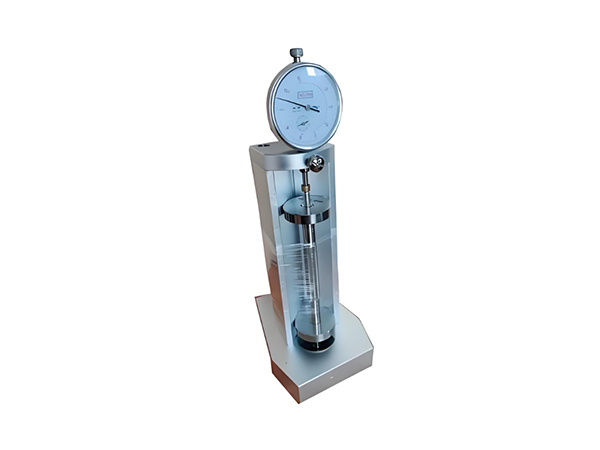
The ISOBY-160 cement specific length meter for mortar is a detailed instrument for measuring length changes. It is suitable for cement expansion agent production plants, cement product plants, research units, universities, construction departments, etc. It is used to measure the linear expansion rate of expansion cement, the free expansion rate and limited expansion rate of self stressing cement, and the limited free expansion rate of cement mortar 2. Main technical parameters:1、 Small scale value of micrometer: 0.001mm
2. Large range of micrometer: 3mm; Electronic dial gauge 7mm
3、 Measurement range: Micrometer: 158-161mm Electronic micrometer: 158-165mm
4. Standard rod base length: 158mm
3. Structural features:
The length gauge is composed of a micrometer, an upper measuring head, a 90 degree V-shaped groove bracket, a lower measuring head, a standard rod, a base, etc. It has the characteristics of easy use, good measurement accuracy, suitable speed, and clear readings. In order to meet the user's requirements, the bracket adopts a V-shaped groove type, and the upper and lower measuring heads use flat measuring heads. This method improves the measurement accuracy and precision, and can be used for testing by a large number of users4. Usage:
1、 Place the length gauge on a flat workbench, then place the standard rod with upper, lower, inner, and outer markings into the V-shaped groove and upper and lower measuring heads of the length gauge. Adjust the dial of the dial indicator to align with the pointer of the dial indicator to the "0" position (this position is the zero point position, which should be calibrated in this way before each use)
2、 Wipe the tested object clean (usually with the labeled end facing upwards and outwards), gently place it into the V-shaped groove of the length gauge bracket and the upper and lower measuring heads, and observe the reading of the dial indicator pointer
3、 When measuring the reading of the test specimen, the first step is to read the value indicated by the small pointer inside the meter, and then read the value indicated by the large pointer. When measuring the test specimen, the outer circle of the large dial with black letters should be read; The red value of the dial indicator reading circle should be read as 1.086mm when the small pointer of the dial gauge is between 1-2 grids and the large pointer is on the 86 scale. It should also be read as 0.068mm when the small pointer is between 0-1 grids and the large pointer is on the 68 scale. For example, if the base length of the standard rod is 158mm and the small pointer of the dial gauge is calibrated on 1 grid and the large pointer is on the "0" point, when measuring the specimen, the small pointer is between 1-2 grids and the large pointer is on the 56 scale, it should be read as 158.056mm. If the small pointer is between 0-1 grids and the large pointer is on 156 and the red 44, it should be read as 158.056mm. The number should be read as 157.956mm or 158mm minus 0.044mm
4、 The length gauge is a delicate measuring instrument, so it is important to handle it gently, keep it clean, avoid collisions, and do not disassemble it casually to avoid affecting measurement accuracy. After use, the length gauge should be wiped clean and stored in a box for future use