


HONESTY IS THE ROOT
Quality is always satisfactory
Hotline
400-606-8981
PRODUCT CATEGORY
LATEST NEWS
MORE
PRODUCT DETAILS
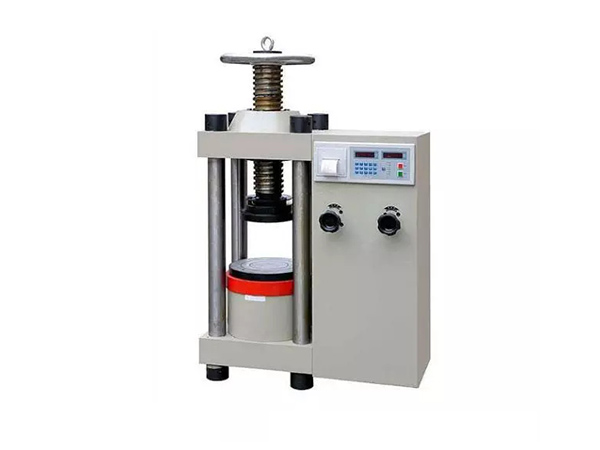
1、 Main purpose: This testing machine complies with the GB/T50081-2002 standard for testing the mechanical properties of ordinary concrete, and has manual loading and loading speed devices
The DYE-2000 digital pressure testing machine is suitable for testing the compressive strength of concrete and is a necessary equipment for construction units such as buildings, highways, bridges, and airports. This testing machine has good accuracy, easy operation, and can be connected to the laboratory center computer. It is currently the best new product for upgrading in China2. Main technical parameters:
1、 Large load: 2000KN
2. Accuracy level: Main product (± 1%)
3. Force measurement range: 200-2000KN
4. Small resolution: 0.1KN
5. Clear distance between upper and lower pressure plates: 320mm
6. Size of upper and lower pressure plates: 250X200mm
7. Piston diameter X large stroke: diameter 250X50mm
8. Motor power: 0.75KW
9. Motor operating voltage: 380V ± 10%
10. Net weight of machine: 800kg
III. Installation and commissioning of concrete pressure testing machine:
1、 Installation: After unpacking the pressure testing machine, there is a lifting threaded hole covered with a nylon plug on the machine body. Open the nylon plug, screw the M20 lifting screw randomly into the threaded hole, and use a lifting machine to lift it to the preset position. When transporting, pay attention to the protruding parts of the machine. For ease of operation, the machine should be placed on a prefabricated cement foundation with dimensions of 720mm x 600mm and a height of 300mm above the ground. After the machine is adjusted to horizontal installation, clean and kerosene soaked cotton yarn should be used to wipe off the rust inhibitor applied to the machined surface of the machine, and then the surface should be wiped clean and coated with a thin layer of mechanical oil
2、 Debugging: This debugging content only includes the preparation work before operation. For other details, please refer to the precautions section
A. Oil injection: Use a screwdriver to unscrew the fixing screws on the rear cover plate and remove the rear cover plate. Inject an appropriate amount of mechanical oil into the 40mm hole on the fuel tank cover plate; The oil injection amount should reach the middle position of the oil mark; After oil injection, cover the back cover plateAttention: When the ambient temperature is 15 ± 5 ℃, use GB443-84N68 mechanical oil; When the ambient temperature is 25 ± 5 ℃, use GB443-84N100 mechanical oil
b. Electrical connection: plug the random power plug into the corresponding socket. The power supply is 380V 50Hz
C. Start the oil pump exhaust: Open the return valve and the delivery valve. Connect the machine power, and the display screen will appear in a random state. Press'; Start up "; Press the key, start the motor, and the oil pump starts working. After about one minute of continuous operation, close the return valve. At this time, it can be observed that the lower pressure plate slowly rises. When the lower pressure plate rises to about 20mm, close the oil delivery valve and open the return valve. At this time, the lower pressure plate is in a falling state. Repeat the above steps 3-4 times to completely eliminate the gas in the system4. Precautions for Concrete Pressure Testing Machine:
1. The power supply voltage needs to be accurate and error free during use
2. The cable connecting the sensor to the host must not have any intermediate joints. If it is damaged, the cable must be replaced and the wiring must be accurate and correct
3. When using, it is necessary to follow the procedures specified in the manual
4. It is strictly prohibited to lower the pressure plate beyond the specified stroke of the piston during operation
5. After prolonged operation, the sealing ring may fail and cause severe oil leakage in the oil cylinder. In this case, the following method should be followed to replace the sealing ringA. Remove the lower pressure plate and dust coverB. Use 2 M12 lifting ring screws to lift out the piston and remove the sealing ring on the inner wall of the oil cylinderC. Install new sealing rings and rings, carefully insert the piston, cover the pressure plate, and always keep its surface smooth and clean when not in use. Do not scratch, scrape, or accumulate impurities
6. The casing of the testing machine needs to be securely grounded, and there are grounding screws on the back of the testing machine frame
7. Calibration is carried out by the metrology department and users are not allowed to operate it arbitrarily
8. The testing machine cannot share a power socket with a high-power electrical device
9. The testing machine should be placed in a clean place to prevent dust from entering, and used in a working environment with a temperature of 10-35 ℃ and humidity ≤ 80%
10. At the end of the experiment, the sensor should be in a unloaded state to protect it. When printing during the experiment, if the printing paper is used up, replace it with new printing paper, press the SEL button, and then press the LF button. The printer will automatically feed the paper
11. Please do not disassemble the instrument without authorization
Maintenance and upkeep of concrete pressure testing machine:
1. After the daily experiment, the broken test blocks must be cleaned and the surfaces of the upper and lower pressure plates and cushion blocks must be kept clean
2. After continuous use for 2-3 months, it is necessary to observe whether the oil level height meets the requirements
3. After 6 months of continuous use, the hydraulic oil needs to be replaced to maintain the cleanliness of the hydraulic system. When replacing, first open the drain plug and wait for the oil to drain before tightening it again. Attention: After replacing the hydraulic oil, the oil pump should be started to exhaust before testing again
4. When not in use for a long time, a plastic cover can be used to cover the machine body to keep the equipment clean. The upper and lower bearing plates and ball seats should be wiped clean before applying a thin oil film to prevent rusting